Easy Crochet Dishcloth Pattern: Beginner Cotton Project
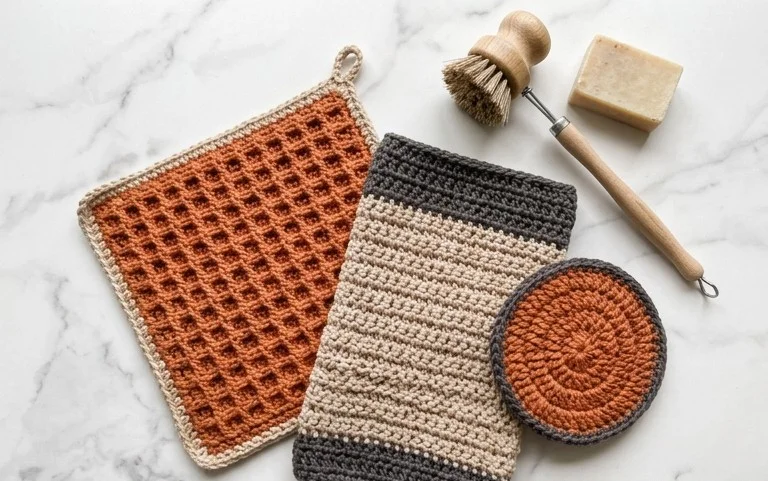
Worsted cotton gives this small dishcloth a firm, slightly textured surface that feels sturdy in the hand and settles into a useful rectangle beside the sink. Worked in straight single-crochet rows, it has a neat, familiar look that suits a first-time crocheter as well as someone who wants a practical afternoon project. One calm color keeps the stitches easy to see, while cotton yarn makes the finished cloth absorbent enough for wiping counters or washing dishes by hand. This Daisy Farm Crafts pattern uses a foundation chain and repeated single crochet, so there are no shaping changes or seams to track. You’ll find yarn and hook details, gauge guidance, row-by-row instructions, and practical notes for checking the edges and adjusting the size. The result is a useful handmade piece for your own kitchen or a small gift to tuck in with a bar of soap.
Why You’ll Love This Pattern
A firm cotton dishcloth with straight single-crochet rows is a useful first project: the fabric is easy to inspect, and each row uses the same stitch. This pattern makes a cloth about 8½ by 7½ inches, a handy size for wiping counters or washing dishes by hand.
The simple rectangle is also a good way to practise keeping the edges even. There are no increases, decreases, color changes, or seams, so you can focus on making consistent stitches. One ball of cotton yarn is usually enough, and the finished cloth can be washed and used often.
The rows were easy to follow, and checking the edge stitches helped me keep the cloth rectangular. The cotton feels sturdy after washing.
— Mara, illustrative tester
Pattern Overview & Skill Level
- Skill Level: Beginner. You need to make a foundation chain and single crochet.
- Approximate Time: 2–3 hours, depending on your pace and how often you pause to count.
- Construction: A flat rectangle worked in back-and-forth rows, with no border or seam.
- Finished Dimensions & Sizing: About 8½ inches wide by 7½ inches tall, using the gauge listed below. Cotton and individual tension can change the final measurements slightly.
Materials & Supplies Needed
- Yarn: About 90–100 yards of worsted-weight cotton yarn, category #4. Choose one color, or use leftover cotton in a single shade. Cotton absorbs water and holds its shape well for a dishcloth.
- Hook Size: 5.0 mm / H-8 crochet hook. If your stitches are unusually tight, try a 5.5 mm / I-9 hook and check the finished width.
- Notions: Tapestry needle for weaving in the two yarn ends, scissors, and a ruler or measuring tape. A removable stitch marker can help identify the first stitch at each row edge.
- Gauge: 14 single crochet stitches and 16 rows measure about 4 inches square after washing and drying. Make a small swatch if matching the stated finished size matters; adjust your hook if the swatch is too large or small.
- Substitutions: Use another smooth, absorbent cotton yarn of similar thickness. Cotton-linen blends are also suitable, though they may feel firmer and drape less. Avoid fuzzy yarn, which can make the stitches harder to see. A different yarn weight or hook can change the cloth’s size and the amount of yarn needed.
Stitch Guide & Abbreviations (US Terms)
- ch = chain.
- sc = single crochet. Insert the hook into the indicated stitch, yarn over and pull up a loop, yarn over again, then pull through both loops on the hook.
- st / sts = stitch / stitches.
The turning chain does not count as a stitch. For a neat edge, make the first single crochet of each row in the first stitch, directly below the turning chain.
Step-by-Step Pattern Instructions
Dishcloth
With the 5.0 mm hook and cotton yarn, make a foundation chain of 31. Keep the chain relaxed so the bottom edge does not pull in. The first single crochet goes into the second chain from the hook.
- Row 1: Sc in the second ch from the hook and in each ch across. Turn. (30 sts)
- Row 2: Ch 1, sc in each st across. Turn. (30 sts)
- Row 3: Ch 1, sc in each st across. Turn. (30 sts)
- Row 4: Ch 1, sc in each st across. Turn. (30 sts)
- Row 5: Ch 1, sc in each st across. Turn. (30 sts)
- Row 6: Ch 1, sc in each st across. Turn. (30 sts)
- Row 7: Ch 1, sc in each st across. Turn. (30 sts)
- Row 8: Ch 1, sc in each st across. Turn. (30 sts)
- Row 9: Ch 1, sc in each st across. Turn. (30 sts)
- Row 10: Ch 1, sc in each st across. Turn. (30 sts)
- Row 11: Ch 1, sc in each st across. Turn. (30 sts)
- Row 12: Ch 1, sc in each st across. Turn. (30 sts)
- Row 13: Ch 1, sc in each st across. Turn. (30 sts)
- Row 14: Ch 1, sc in each st across. Turn. (30 sts)
- Row 15: Ch 1, sc in each st across. Turn. (30 sts)
- Row 16: Ch 1, sc in each st across. Turn. (30 sts)
- Row 17: Ch 1, sc in each st across. Turn. (30 sts)
- Row 18: Ch 1, sc in each st across. Turn. (30 sts)
- Row 19: Ch 1, sc in each st across. Turn. (30 sts)
- Row 20: Ch 1, sc in each st across. Turn. (30 sts)
- Row 21: Ch 1, sc in each st across. Turn. (30 sts)
- Row 22: Ch 1, sc in each st across. Turn. (30 sts)
- Row 23: Ch 1, sc in each st across. Turn. (30 sts)
- Row 24: Ch 1, sc in each st across. Turn. (30 sts)
- Row 25: Ch 1, sc in each st across. Turn. (30 sts)
- Row 26: Ch 1, sc in each st across. Turn. (30 sts)
- Row 27: Ch 1, sc in each st across. Turn. (30 sts)
- Row 28: Ch 1, sc in each st across. Turn. (30 sts)
- Row 29: Ch 1, sc in each st across. Turn. (30 sts)
- Row 30: Ch 1, sc in each st across. Do not turn. (30 sts)
Finishing
Cut the yarn, leaving a tail about 6 inches long, and pull the tail through the loop on your hook to fasten off. Thread the tail onto a tapestry needle and weave it through several stitches on the wrong side, then change direction and weave through a few more stitches. Secure the starting tail in the same way. Trim the ends close without cutting into the cloth. Wash and dry the dishcloth before measuring it or putting it to use.
Care & Washing Instructions
- Wash cotton in a machine on a warm cycle, about 40°C / 104°F, or follow the yarn label if it recommends cooler water.
- Dry flat or tumble dry on low; high heat can make cotton shrink or feel stiff.
- While damp, smooth the cloth back into a rectangle and let it finish drying flat. Follow the yarn label if you use a cotton blend.
Pro Tips & Common Mistakes to Avoid
- Keep your tension even, especially along the foundation chain. If the bottom edge is much tighter than the rows, remake the chain with a slightly larger hook or work each chain more loosely.
- Count 30 stitches at the end of every row. Place a removable marker in the first or last stitch if the edge is difficult to see; this helps prevent accidentally skipping the final stitch.
- Check that the turning chain is not being counted as a stitch. Counting it can add an unwanted stitch to each row and make the sides slant outward.
- To make a wider or taller cloth, add foundation chains in the width and rows in the height. Each extra chain adds roughly the width of one stitch, and more stitches and rows use more yarn. Keep the starting chain one stitch longer than the number of stitches you want.
Frequently Asked Questions
Can I use acrylic yarn for this dishcloth?
You can, but acrylic usually absorbs water less readily than cotton and may feel less suited to washing dishes. If you substitute it, choose a smooth worsted-weight yarn and expect the texture and finished size to differ. Follow the care instructions on its label.
How can I make the dishcloth larger?
Add chains to the foundation for a wider cloth, keeping one extra chain for the turning chain. Work additional rows for more height. A larger cloth needs more yarn, so have an extra ball available if you increase both dimensions.
Is this a suitable first crochet project?
Yes. The pattern uses only chain and single crochet, and the stitch count stays at 30 throughout. The main challenge is placing the first and last stitch correctly so the edges remain straight.
May I sell dishcloths made from this pattern?
Check the designer’s terms for the pattern you are following before selling finished items. If you sell your work, describe the materials accurately and do not present the pattern itself as your own.
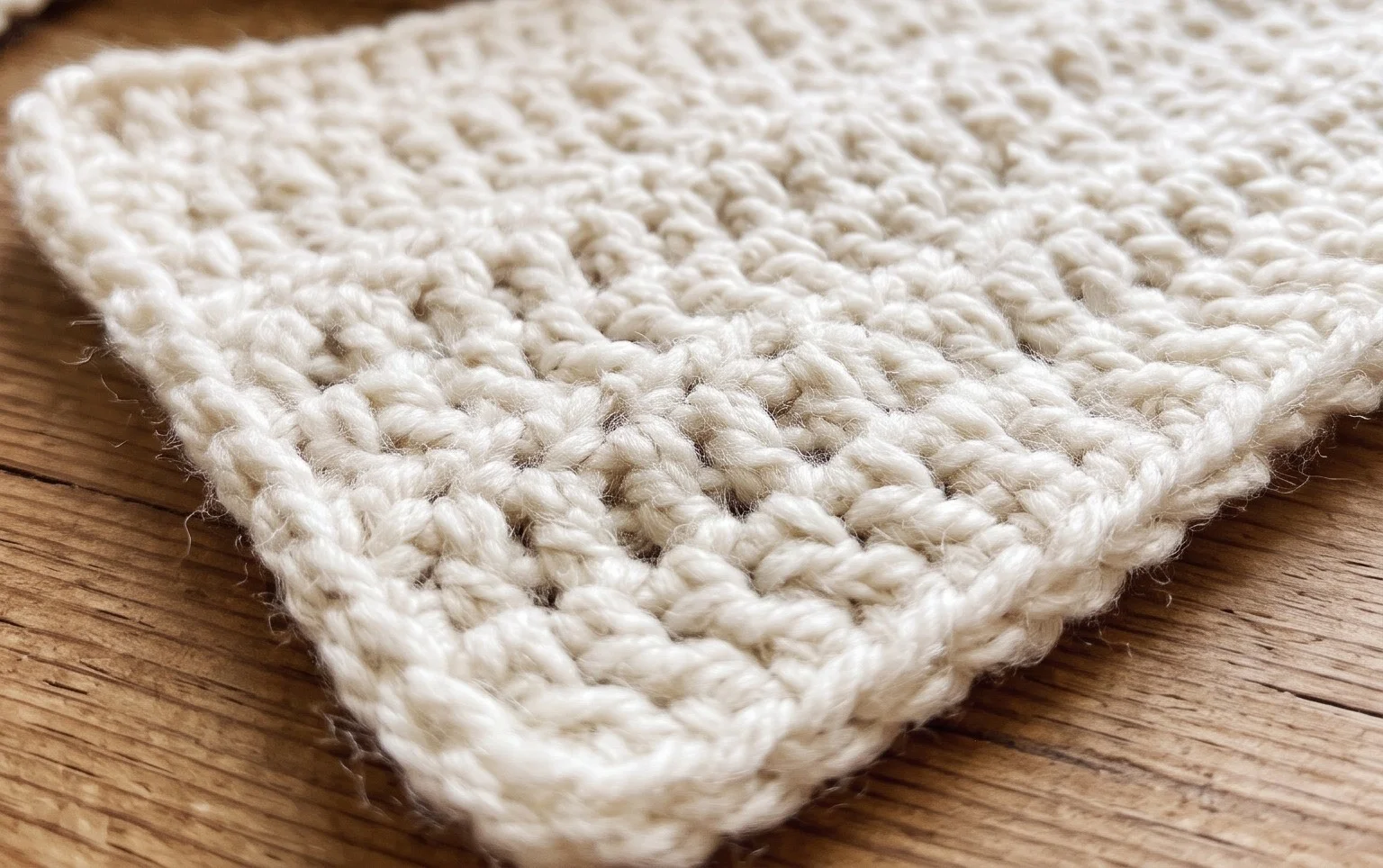
Once the last row is complete, you’ll have a firm cotton dishcloth that is ready for the sink and small enough to finish in an afternoon. Check that the edges lie flat, then weave in the yarn ends securely so they stay put through regular washing. For a simple variation, choose a different cotton color or use two shades in separate cloths while keeping the same stitch pattern. Share a photo of your finished rectangle on Pinterest or your favorite social media platform; it’s always helpful to see how a project looks in another kitchen. When you’re ready for your next make, explore more free crochet patterns on the blog, including other practical projects for home and gifts.