Easy Ugly Christmas Sweater Crochet Ornament Free Pattern
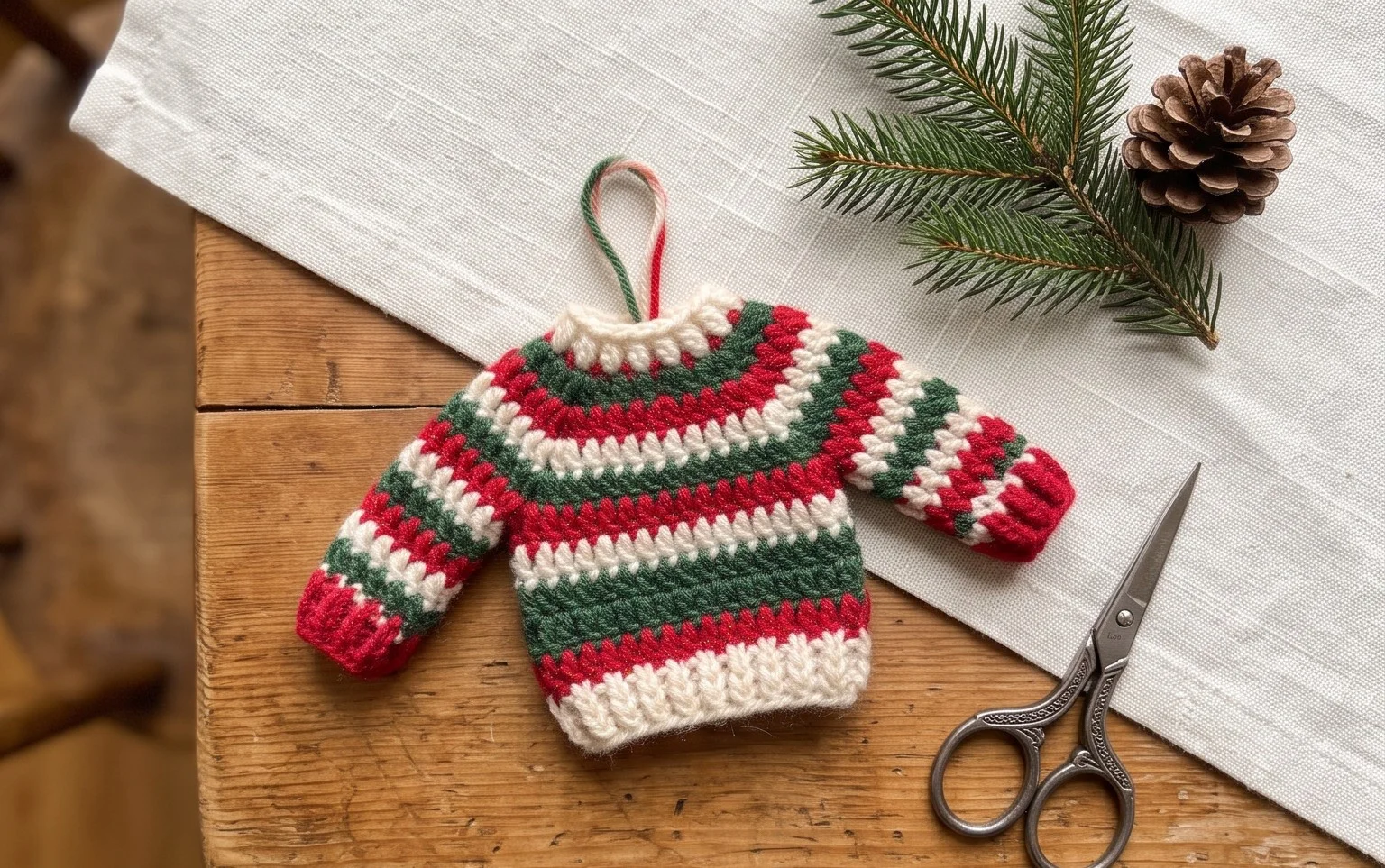
Bright little sweater shapes, playful color changes, and a loop for hanging give this crochet ornament its festive feel. The finished piece is small and lightweight, with the cozy look of a holiday sweater scaled down for a Christmas tree, gift tag, or seasonal garland. It suits beginners who want to practice basic crochet stitches, and it is a cheerful project for gift makers and anyone who likes handmade holiday decor. The work is satisfying because a few rows quickly become a recognizable sweater, while small details let you make each one your own. As you follow the pattern, you’ll learn how the sweater shape comes together and how to manage color changes and neat edges. Use your favorite Christmas colors, or choose an unexpected palette for a playful twist.
Why You’ll Love This Pattern
A firm cotton dishcloth with a simple single-crochet fabric is useful at the sink and easy to make in an evening. The straight rows make this a practical project for practicing even tension without needing to manage increases, decreases, or joined rounds.
One cloth uses a modest amount of yarn, so a partial skein can be enough. The dense fabric holds up to regular use, and the finished size is large enough for washing dishes or wiping counters. It also makes a useful handmade gift when paired with a bar of soap or a kitchen towel.
I made this in one sitting, and the row count made it easy to keep my edges straight.
— Mia, beginner crocheter
Pattern Overview & Skill Level
- Skill Level: Beginner. You need to know how to chain and single crochet.
- Approximate Time: About 2–3 hours, depending on your pace and tension.
- Construction: A flat rectangle worked back and forth in rows, then finished by weaving in the two yarn ends.
- Finished Dimensions & Sizing: Approximately 8.5 × 7.5 in (21.5 × 19 cm) before washing, based on the gauge below. Cotton can relax slightly after its first wash.
This pattern uses US crochet terms. The turning chain does not count as a stitch, so each row has 30 single crochet stitches.
Materials & Supplies Needed
- Yarn: About 70 yd (64 m) of worsted-weight cotton yarn, category #4. Choose one color or use two colors, changing yarn at the row edge.
- Hook: 5.0 mm (US H-8) crochet hook. Use the hook that gives you a compact but flexible fabric.
- Notions: Tapestry needle for weaving in ends, scissors, and a ruler or measuring tape.
- Substitutions: A cotton-linen blend can work if its label recommends a similar hook size, though it may feel slightly less soft. Avoid acrylic for a dishcloth because it does not absorb water as readily as cotton. A thicker yarn or larger hook will make a larger, looser cloth and use more yarn; a finer yarn or smaller hook will make a smaller, denser cloth.
Gauge: 14 sc and 16 rows measure about 4 in (10 cm) in single crochet. Gauge matters here because it determines whether the cloth reaches the stated dimensions. Make a small swatch if you want to match the finished size closely.
Stitch Guide & Abbreviations (US Terms)
- ch: Chain.
- sc: Single crochet. Insert the hook in the stitch, yarn over and pull up a loop, yarn over again and pull through both loops on the hook.
- st: Stitch.
The turning chain at the start of each row does not count as a stitch. Work the first sc into the first stitch of the previous row, not into the turning chain.
Step-by-Step Pattern Instructions
Dishcloth
- Foundation: With cotton yarn, ch 31. This chain includes one turning chain and 30 chains for the first row.
- Row 1: Sc in the second ch from the hook and in each ch across. Turn. (30 sts)
- Row 2: Ch 1, sc in each st across. Turn. (30 sts)
- Rows 3–30: Repeat Row 2. Count 30 sc in every row. After Row 30, do not turn. (30 sts per row)
Measure the rectangle before finishing. At the stated gauge, it should be close to 8.5 × 7.5 in (21.5 × 19 cm). If it is noticeably narrower, your stitches may be tight; if it is wider, your stitches may be loose. The cloth remains usable even when your gauge differs slightly.
Finishing
- Cut the yarn, leaving a tail of about 6 in (15 cm), and pull the tail through the last loop to secure it.
- Thread the tail onto a tapestry needle. Weave it through several stitches on the wrong side, then change direction and weave through a few more stitches so it stays put during washing.
- Weave in the starting tail the same way. Trim both ends close to the fabric without cutting any stitches.
- Wash and reshape the cloth before use if desired. Cotton may soften and settle into shape after its first wash.
Care & Washing Instructions
- For cotton yarn, machine wash with like colors in warm water, up to about 40°C (104°F), or follow the yarn label.
- Dry flat or tumble dry on low heat; reshape the edges while the cloth is damp.
- Blocking is optional: dampen the cloth, smooth it to the intended rectangle, and let it dry flat. Follow the yarn label if you used a blend.
Pro Tips & Common Mistakes to Avoid
- Keep your tension steady but not tight. If the cloth feels stiff or curls at the edges, try a 5.5 mm hook; if the fabric has large gaps, try a 4.5 mm hook.
- Count the stitches at the end of each row. The first and last stitches are easy to miss, and losing one stitch per row can make the rectangle slant.
- Use a removable stitch marker in the first stitch of a row if you have trouble spotting it after turning. Move the marker up as you work.
- Weave each yarn tail through the back of several stitches, then reverse direction. To make a larger cloth, add chains in the foundation and work the same number of sc in each row; more width and rows use more yarn.
Frequently Asked Questions
Can I use a different cotton yarn?
Yes. Choose a yarn with a similar worsted weight and check its label for a recommended hook size. A thinner yarn will make a smaller cloth, while a thicker yarn will make a larger one. The fabric should feel absorbent and compact, not stiff or full of open gaps.
How can I make the dishcloth wider or longer?
For more width, chain the number of stitches you want plus one turning chain. For example, chain 36 to begin with 35 sc in Row 1. For more length, work additional repeats of Row 2. Both changes increase the amount of yarn needed.
Is this pattern suitable for a first crochet project?
Yes. It uses only chains and single crochet, with no shaping or complicated finishing. Check that each row has 30 stitches, and use a marker at the first stitch if the row edges are hard to see.
May I sell dishcloths made from this pattern?
Check the designer’s terms before selling finished items, especially if the pattern came from a published source. You can also describe your finished cloth accurately and avoid presenting the pattern itself as your own.
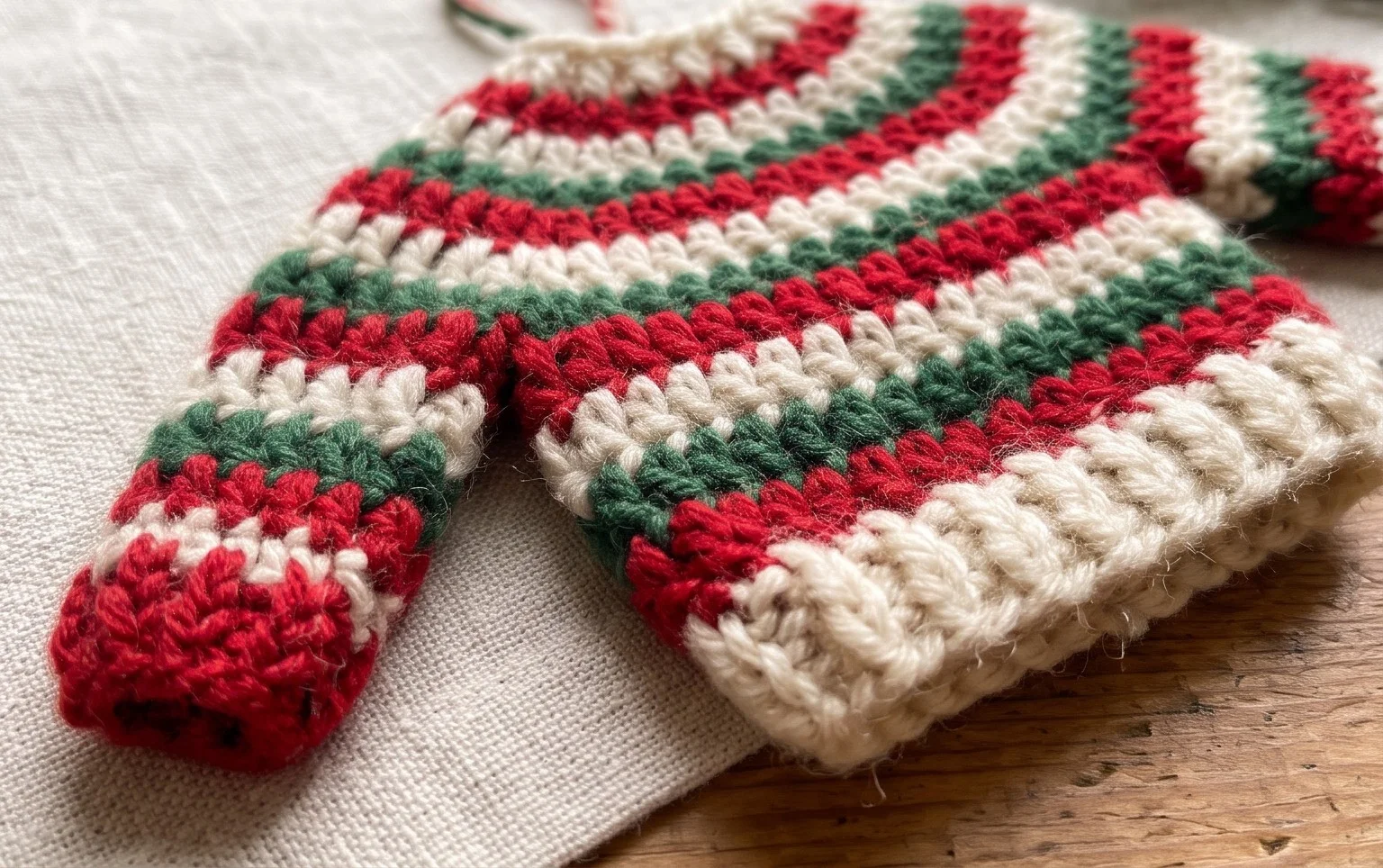
Your little sweater is ready to bring a handmade touch to the tree, a wrapped gift, or a strand of holiday garland. Each one can look different with only a small change, so try a classic red-and-green palette or use leftover yarn in two contrasting colors. If you make one, share a photo on Pinterest or your favorite social media platform; it is always fun to see the colors and finishing details other crocheters choose. For another relaxing project to work into your holiday making, explore more free crochet patterns on the blog.